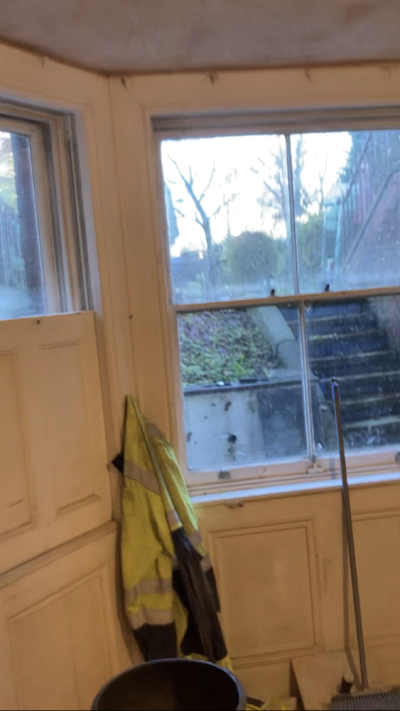
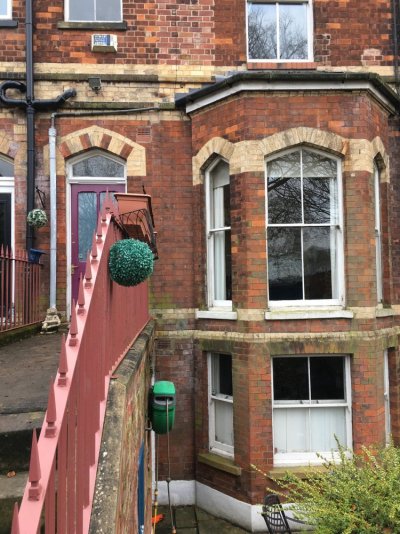
I have an 1870s house, mid terrace 4 story’s. The ground floor sits about 6ft below ground level but no soil is against the brick. Steps down to a patio at the back and a brick trench to the front.
All rooms downstairs are suffering from damp with evidence of salts. The previous owners used the largest of the rooms as a living room. We moved in in 2018 and used that room for storage. The following summer I noticed damp patches and salts on the walls around the chimney breast. This was left for a few years as there was plenty of other rooms to sort.
This year we have decided to renovate this room. A gas stove was fitted in the room previously. Removing this uncovered that the installation was mainly stuck together with bonding. This bonding was in contact with the floor which was a poor concrete base over ash. Bonding was in contact directly with the damp floor and was all wet throughout.
Plaster was knocked off back to brick in the affected area and left over summer to breathe. There was previous evidence of a chemical dpc which had been plastered over. The plaster was a mix of bonding, renovation plaster and sand and cement render suggesting someone has had attempts at fixing in the past.
I have put in a new chemical dpc and treated with salt neutraliser before being replastered with renovation plaster with a multifinsh skim over the top (I know this could have been an error only time will tell). New plaster does not breach the chemical dpc.
I plan to have an open fire installed, Victorian cast iron insert. The installer suggested to dig out the old hearth within the chimney. Line with visqueen and fill with concrete ready for him to lay the hearth on top. Digging down revealed the original brick tiles layed on lime mortar below the concrete and ash. I removed the tiles and have about a 7 inch hole.
It also reveals the whole floor has had the tiles removed and concrete poured over the lime base up to the slate dpc level then a further 20mm of screed or concrete on top of this.
What are my options. Can I build the new hearth breathable with lime without breaching the slate damp course. Or do I just fill with concrete as advised.
The concrete screed looks like it may have been poured short of the walls then filled around the edge at a later date.
The concrete slab is damp around the edges when I lift the current wooden floor with membrane but dry in the middle.
How can I stop the concrete floor pushing damp into the wall? Or will what I have done so far be enough?
Sorry for the long post I look forward to your opinions
All rooms downstairs are suffering from damp with evidence of salts. The previous owners used the largest of the rooms as a living room. We moved in in 2018 and used that room for storage. The following summer I noticed damp patches and salts on the walls around the chimney breast. This was left for a few years as there was plenty of other rooms to sort.
This year we have decided to renovate this room. A gas stove was fitted in the room previously. Removing this uncovered that the installation was mainly stuck together with bonding. This bonding was in contact with the floor which was a poor concrete base over ash. Bonding was in contact directly with the damp floor and was all wet throughout.
Plaster was knocked off back to brick in the affected area and left over summer to breathe. There was previous evidence of a chemical dpc which had been plastered over. The plaster was a mix of bonding, renovation plaster and sand and cement render suggesting someone has had attempts at fixing in the past.
I have put in a new chemical dpc and treated with salt neutraliser before being replastered with renovation plaster with a multifinsh skim over the top (I know this could have been an error only time will tell). New plaster does not breach the chemical dpc.
I plan to have an open fire installed, Victorian cast iron insert. The installer suggested to dig out the old hearth within the chimney. Line with visqueen and fill with concrete ready for him to lay the hearth on top. Digging down revealed the original brick tiles layed on lime mortar below the concrete and ash. I removed the tiles and have about a 7 inch hole.
It also reveals the whole floor has had the tiles removed and concrete poured over the lime base up to the slate dpc level then a further 20mm of screed or concrete on top of this.
What are my options. Can I build the new hearth breathable with lime without breaching the slate damp course. Or do I just fill with concrete as advised.
The concrete screed looks like it may have been poured short of the walls then filled around the edge at a later date.
The concrete slab is damp around the edges when I lift the current wooden floor with membrane but dry in the middle.
How can I stop the concrete floor pushing damp into the wall? Or will what I have done so far be enough?
Sorry for the long post I look forward to your opinions