
jbishop1987
Member
- Messages
- 1
- Location
- Devon
Hi,
I'm fortunate to be converting a stone agricultural building into a home. Based over 3 floors and rectangular shape,
- Ground floor has the long side as a retaining wall, which is particularly damp; delta membrane pumped perimeter drainage installed.
- Mid-floor - open plan living space.
- Bedrooms in the roof space ( fairly new roof although vented ridge and soffit vents need to be added)
On the mid-floor of a building, has a timber stud built 40-50mm from the wall. The space is large open plan for kitchen and dining due to the external ground levels. I want the wall to be as breathable as possible to help mitigate any moisture issues which could occur and due to the lower floor make-up. It's almost a timber box within the stone walls, so air passage around the timber frame is possible; although only two small vents on the ground floor through the stone wall, and vents in the soffit can be added easily.
Utilising the mid-floor timber stud (400c), I was considering
- 100mm Wood Fibre Slabs in the wall,
- overboard with 15mm Woodwool board,
-lime plaster.
Or
100mm Mineral Wool
Active VCL
Woodwood Boards
Lime Plaster
My concerns...
- the cavity might allow condensation to form, although allow air circulation from the lower floors
- unsure of the breathability of the stone wall.
- Could the timber stud wall draw more moisture from the living space into the cavity, compounding any moisture issues?
The architectural drawings use PIR board, which I feel is an oversight and will cause issues later on; but does achieve wonderful u-values.......:-(
The property does have an MVHR installed; primarily to help with air movement rather than efficient heating
Any advice or experience is welcome. I feel I keep going around in circles.
Many Thanks
James
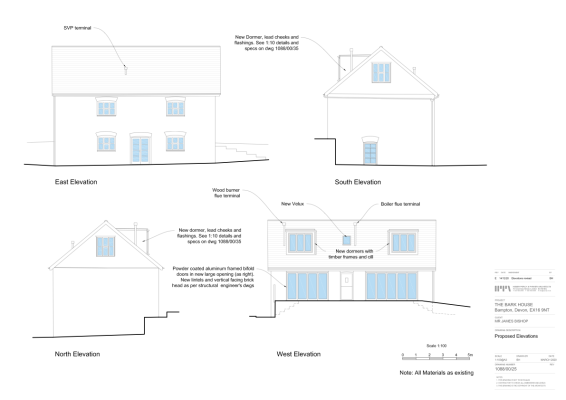
I'm fortunate to be converting a stone agricultural building into a home. Based over 3 floors and rectangular shape,
- Ground floor has the long side as a retaining wall, which is particularly damp; delta membrane pumped perimeter drainage installed.
- Mid-floor - open plan living space.
- Bedrooms in the roof space ( fairly new roof although vented ridge and soffit vents need to be added)
On the mid-floor of a building, has a timber stud built 40-50mm from the wall. The space is large open plan for kitchen and dining due to the external ground levels. I want the wall to be as breathable as possible to help mitigate any moisture issues which could occur and due to the lower floor make-up. It's almost a timber box within the stone walls, so air passage around the timber frame is possible; although only two small vents on the ground floor through the stone wall, and vents in the soffit can be added easily.
Utilising the mid-floor timber stud (400c), I was considering
- 100mm Wood Fibre Slabs in the wall,
- overboard with 15mm Woodwool board,
-lime plaster.
Or
100mm Mineral Wool
Active VCL
Woodwood Boards
Lime Plaster
My concerns...
- the cavity might allow condensation to form, although allow air circulation from the lower floors
- unsure of the breathability of the stone wall.
- Could the timber stud wall draw more moisture from the living space into the cavity, compounding any moisture issues?
The architectural drawings use PIR board, which I feel is an oversight and will cause issues later on; but does achieve wonderful u-values.......:-(
The property does have an MVHR installed; primarily to help with air movement rather than efficient heating
Any advice or experience is welcome. I feel I keep going around in circles.
Many Thanks
James