
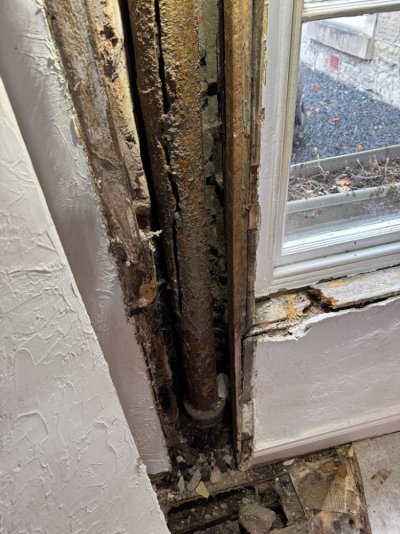
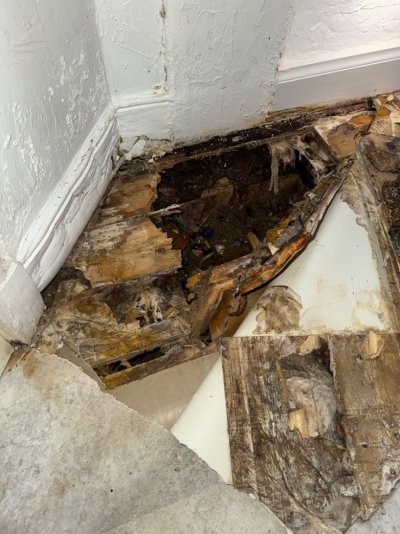
I have a dry rot problem with a known cause - water escape from a walled-in cast iron waste pipe possibly blocked then cracked from freezing some years ago. This cause is covered by my Hiscox Private Insurance but after confirming this they are doing their best to get out of it, loss adjuster appointed, full building survey trying to find if I have misrepresented the property in any small detail, waiting for a 'forensic dry rot specialist' coming from the Home Counties to Scotland. Before paying out a single penny they have ramped up my March renewal from £2950 to £4950. I've documented the problem in detail with photographs, paid out £780 to have the cracked pipe removed and a new plastic one put in to be able to use the baths/basins and a washing machine on the floor above. This is never covered by insurance - it excludes the cost of repairing or replacing pipes in the event of water ingress, but covers the effects of the leak. Every professional who has looked at the issue from the first local timber treatment firm recommended by a builder I got in to put new floorboards in a corner (he spotted the dry rot, I was unaware) agrees on the cause as a concealed intermittent water escape.
The insurers asked for an intrusive/destructive investigation, first uncovering the pipe (which is when the crack became evident) then hack off plastic, lifting floorboards, digging into solid flooring etc. The firm used charged about 50% more than their £480+VAT base price - this element is covered by the insurance officially, £500 excess, and basically I'm only £260 down on 'claimable' costs but £2000 more on their hike in insurance, assuming they do pay out. The quote resulting from this survey was £48,500 and that excludes many additional costs like flooring and reinstatement of the (very high end solid wood) kitchen which must be stripped out. But I didn't trust the costing and do not agree that the suspended floor of a circa 1830 kitchen should be replaced by a solid floor, or that larder and store room solid floors need excavating or plaster stripping to ceiling height (etc).
I've now paid out £180 for an alternative dry rot specialist to look it and he's said no way a Regency house with designed in airflow in the solum should have a solid floor put it, and he also says that existing solid floor areas need excavating - says these and the walls do need drilling, spraying, replastering to 1m as the hyphae can only be seen to have followed the base of the walls at the edge of solid flooring to reach door frame timber. The airflow has spread a blanket of spores under the wooden floor and infected an early 20th c tall kitchen cupboard, flooring under it, and adjacent wall but all this can be seen clearly and brick exposed at 1m height shows no sign of spread upwards. He has given a ball park cost HALF that of the first company, including putting in a new wooden floor with heavier joists, possibly avoiding removal of some of the kitchen units. Waiting for a formal quote but he said £30k tops. He also made useful comments on the masonry outside, historic incorrect pointing using cement not lime mortar, damp course injection (1988) etc.
Fortunately it's a big house with east and west wings I have as 3-bed airbnb units each, so I have some income expected, and do not employ any cleaners etc just do it all myself - otherwise one state pension and a £600 a month annuity does not even begin to cover the costs of living in a 24-room, 5000 sq ft home. It's up for sale, but that has been paused for obvious reasons. I had an unconditional offer from a developer the week I put it on the market last year, no survey needed, just sign here and take the cash but of course turned that down (it was £150k under the asking price).
This is not the first time my insurers, always high end and Grade B listed compatible, have screwed me on claims for devious reasons. A few years ago it was clear that water had been getting into an end wall I rarely saw, resulting in needing the chimney and wall below it rebuilding by a stonemason. The cause was not lack of maintenance, it was because of maintenance - I'd had new cast iron guttering put in all round, and the 'expert' who did it had nibbled a big notch out of the inside edge of a rhone rather than dressing back a rustic freestone block which came 1cm or two out where the gutter passed. Result, water poured on to the wall from this cutaway, unseen by me, for a few years. £10k to fix - the insurers paid £1000 because only the interior decoration was covered for penetrating water! Can't remember who it was but I moved and that's how, via various changes of insurance company ownership, I ended up with the Hiscox Private Insurance high value buildings policy.
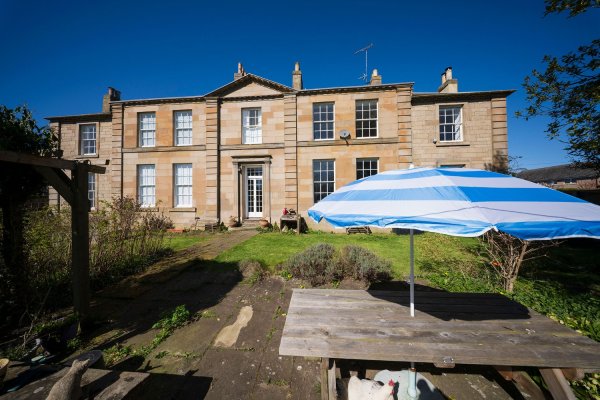
My house would of course be worth £2m in most parts of England and several times that in London. In the Scottish Borders it's an £800k house and when bought, it was basically a similar price to a 4-bed interwar semi in Sheffield. But the rebuild cost of a freestone Adam-style neoclassical villa with a 30m garden facade frontage is of course calculated differently.
If I'm left without support from the insurers, I do not have resources to cover the costs of the contractors and I'll have to tackle the repairs and dry rot elimination myself. I think this would cost me about £1k in treatment solutions, the same in joinery, and a summer of my own spare time but the results would carry no warranty. It's already my intention to remain in the central part of the house, as it's just a lovely place to be. I can properly divide off and sell the west wing with no more than £10k of work include architect and all permissions, then use some of the proceeds to do the same with a more complex unlinking of the east wing, neither of which are anywhere near this very localised dry rot.
But of course the best solution is to get the insurance to cover what I paid them to cover, to authorise work, to work with me and my architect, to conform to the Grade B listing requirements, respect the structure. Has anyone had similar loss adjuster, additional surveys, and protracted (now into third month clear of not signing off the claim) stalling by their insurance provider?
The insurers asked for an intrusive/destructive investigation, first uncovering the pipe (which is when the crack became evident) then hack off plastic, lifting floorboards, digging into solid flooring etc. The firm used charged about 50% more than their £480+VAT base price - this element is covered by the insurance officially, £500 excess, and basically I'm only £260 down on 'claimable' costs but £2000 more on their hike in insurance, assuming they do pay out. The quote resulting from this survey was £48,500 and that excludes many additional costs like flooring and reinstatement of the (very high end solid wood) kitchen which must be stripped out. But I didn't trust the costing and do not agree that the suspended floor of a circa 1830 kitchen should be replaced by a solid floor, or that larder and store room solid floors need excavating or plaster stripping to ceiling height (etc).
I've now paid out £180 for an alternative dry rot specialist to look it and he's said no way a Regency house with designed in airflow in the solum should have a solid floor put it, and he also says that existing solid floor areas need excavating - says these and the walls do need drilling, spraying, replastering to 1m as the hyphae can only be seen to have followed the base of the walls at the edge of solid flooring to reach door frame timber. The airflow has spread a blanket of spores under the wooden floor and infected an early 20th c tall kitchen cupboard, flooring under it, and adjacent wall but all this can be seen clearly and brick exposed at 1m height shows no sign of spread upwards. He has given a ball park cost HALF that of the first company, including putting in a new wooden floor with heavier joists, possibly avoiding removal of some of the kitchen units. Waiting for a formal quote but he said £30k tops. He also made useful comments on the masonry outside, historic incorrect pointing using cement not lime mortar, damp course injection (1988) etc.
Fortunately it's a big house with east and west wings I have as 3-bed airbnb units each, so I have some income expected, and do not employ any cleaners etc just do it all myself - otherwise one state pension and a £600 a month annuity does not even begin to cover the costs of living in a 24-room, 5000 sq ft home. It's up for sale, but that has been paused for obvious reasons. I had an unconditional offer from a developer the week I put it on the market last year, no survey needed, just sign here and take the cash but of course turned that down (it was £150k under the asking price).
This is not the first time my insurers, always high end and Grade B listed compatible, have screwed me on claims for devious reasons. A few years ago it was clear that water had been getting into an end wall I rarely saw, resulting in needing the chimney and wall below it rebuilding by a stonemason. The cause was not lack of maintenance, it was because of maintenance - I'd had new cast iron guttering put in all round, and the 'expert' who did it had nibbled a big notch out of the inside edge of a rhone rather than dressing back a rustic freestone block which came 1cm or two out where the gutter passed. Result, water poured on to the wall from this cutaway, unseen by me, for a few years. £10k to fix - the insurers paid £1000 because only the interior decoration was covered for penetrating water! Can't remember who it was but I moved and that's how, via various changes of insurance company ownership, I ended up with the Hiscox Private Insurance high value buildings policy.
My house would of course be worth £2m in most parts of England and several times that in London. In the Scottish Borders it's an £800k house and when bought, it was basically a similar price to a 4-bed interwar semi in Sheffield. But the rebuild cost of a freestone Adam-style neoclassical villa with a 30m garden facade frontage is of course calculated differently.
If I'm left without support from the insurers, I do not have resources to cover the costs of the contractors and I'll have to tackle the repairs and dry rot elimination myself. I think this would cost me about £1k in treatment solutions, the same in joinery, and a summer of my own spare time but the results would carry no warranty. It's already my intention to remain in the central part of the house, as it's just a lovely place to be. I can properly divide off and sell the west wing with no more than £10k of work include architect and all permissions, then use some of the proceeds to do the same with a more complex unlinking of the east wing, neither of which are anywhere near this very localised dry rot.
But of course the best solution is to get the insurance to cover what I paid them to cover, to authorise work, to work with me and my architect, to conform to the Grade B listing requirements, respect the structure. Has anyone had similar loss adjuster, additional surveys, and protracted (now into third month clear of not signing off the claim) stalling by their insurance provider?
