
We are having our little kitchen (approx 9m2) updated this April which is situated at the back of our Victorian Mid Terrace we bought last May.
This area has quite a few problems including excessive moisture produced inside from typical kitchen/utility activities and a shower room attached. There is also no heating in this room other than what is produced from the oven. That combined with having two cold outside walls naturally has produced mould and has become noticeably worse over this winter. At some point a concrete floor has been added, the walls are gypsum skimmed and cement pointing has been added to the brickwork outside - all big no nos we want to remedy. Getting rid of the concrete floor and adding back in a suspended timber floor would be great but we just do not have the time or budget for this work right now - we hope to extend sympathetically in the future anyway!
After having a discussion with our lime plasterer, we agreed that the wall on the left (window side) will be redone in lime after the gypsum is removed as no non-breathable materials will be added back. We eventually intend to repoint in lime making that wall vapour permeable inside to outside.
The wall on the right hand side will be having wall cabinets and tiles so we agreed lime plastering this wasn't worth it with the non-breathable materials being added.
What the lime plasterer did suggest instead was adding a ventilated metal framed studwall to the existing solid wall creating a minimum 50mm open cavity for moisture management. This wall goes out to the covered passage/alleyway which runs through the length of the house with that external brickwork just being covered in lime wash. This stud work would then be boarded and plastered as normal with vents added top and bottom for moisture to escape through. Timber studs would go between the metal framing to support cabinets and hide electrics. Considering the narrow space, adding more than 50mm is not possible as would interfere with the walkthrough space and opening the dishwasher.
I was interested in the concept and he recommended a builder who did a flying visit to quote for said studwork but I have not been able to have a proper face to face discussion about how exactly this would work (communication with builder hasn't been the best). I'm also a humble DIYer and find trying to get straight answers about sympathetic building solutions for Victorian houses to be a complete headache of conflicting information.
My questions are - Is this a typical/sensible solution for managing high moisture areas of solid wall houses?
Will installing it make a significant difference to moisture or will the lime plastering on the opposite wall be enough? For context, we will also be adding a new vented-to-the-outside cooker hood which the space was previously lacking of a working one.
Should we even bother with the studwork at all considering its adding another £1000 to the budget and added time to the fitting/install? Are there other solutions that can help in the same way?
I've attached a few pictures to show the space and floorplan.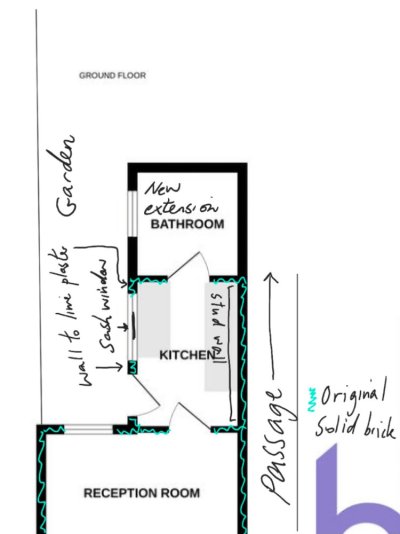
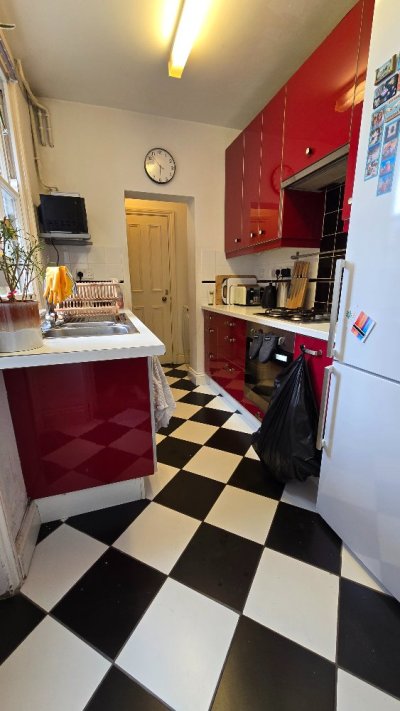
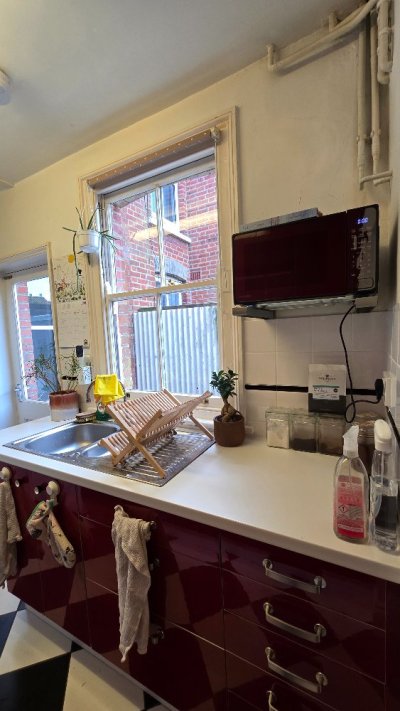
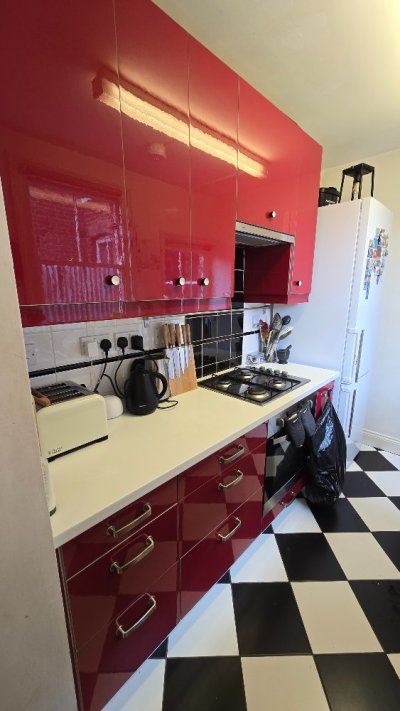
This area has quite a few problems including excessive moisture produced inside from typical kitchen/utility activities and a shower room attached. There is also no heating in this room other than what is produced from the oven. That combined with having two cold outside walls naturally has produced mould and has become noticeably worse over this winter. At some point a concrete floor has been added, the walls are gypsum skimmed and cement pointing has been added to the brickwork outside - all big no nos we want to remedy. Getting rid of the concrete floor and adding back in a suspended timber floor would be great but we just do not have the time or budget for this work right now - we hope to extend sympathetically in the future anyway!
After having a discussion with our lime plasterer, we agreed that the wall on the left (window side) will be redone in lime after the gypsum is removed as no non-breathable materials will be added back. We eventually intend to repoint in lime making that wall vapour permeable inside to outside.
The wall on the right hand side will be having wall cabinets and tiles so we agreed lime plastering this wasn't worth it with the non-breathable materials being added.
What the lime plasterer did suggest instead was adding a ventilated metal framed studwall to the existing solid wall creating a minimum 50mm open cavity for moisture management. This wall goes out to the covered passage/alleyway which runs through the length of the house with that external brickwork just being covered in lime wash. This stud work would then be boarded and plastered as normal with vents added top and bottom for moisture to escape through. Timber studs would go between the metal framing to support cabinets and hide electrics. Considering the narrow space, adding more than 50mm is not possible as would interfere with the walkthrough space and opening the dishwasher.
I was interested in the concept and he recommended a builder who did a flying visit to quote for said studwork but I have not been able to have a proper face to face discussion about how exactly this would work (communication with builder hasn't been the best). I'm also a humble DIYer and find trying to get straight answers about sympathetic building solutions for Victorian houses to be a complete headache of conflicting information.
My questions are - Is this a typical/sensible solution for managing high moisture areas of solid wall houses?
Will installing it make a significant difference to moisture or will the lime plastering on the opposite wall be enough? For context, we will also be adding a new vented-to-the-outside cooker hood which the space was previously lacking of a working one.
Should we even bother with the studwork at all considering its adding another £1000 to the budget and added time to the fitting/install? Are there other solutions that can help in the same way?
I've attached a few pictures to show the space and floorplan.
