Chemical Cat
Member
- Messages
- 3
- Location
- Falkirk
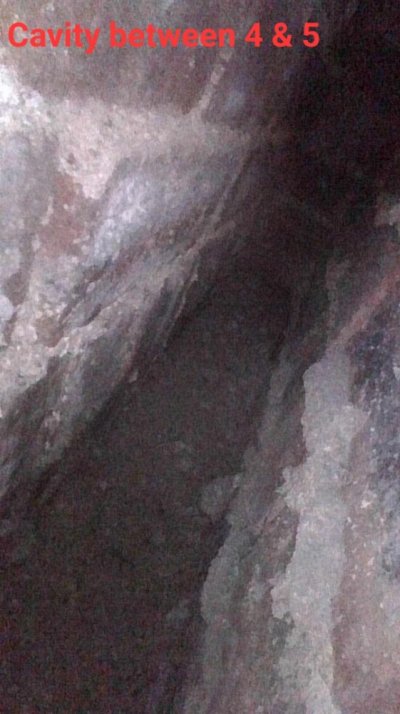
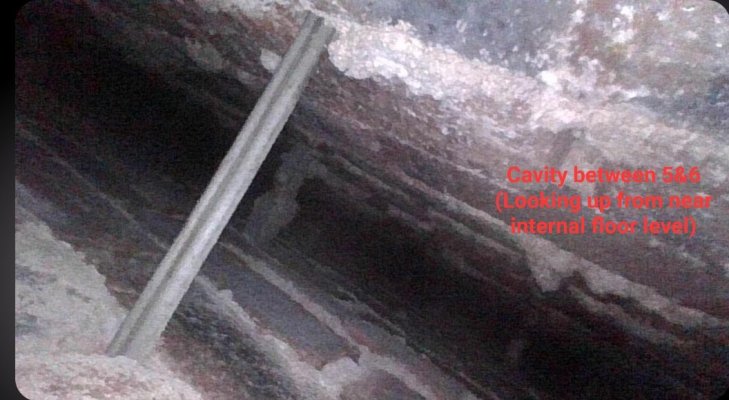
We recently bought this 1910 brick house. Cavity walls. Walls are approx 20 inches thick. Exterior brick formation is one header course alternating with five stretcher courses.
The problem I'm looking to solve is damp and ventilation in the corners of the sub floor void. Inside the rooms the relative humidity, temperature, and ventilation are all ok. RH is always around 40%, temp 20-23c, and it's an easy house to ventilate.
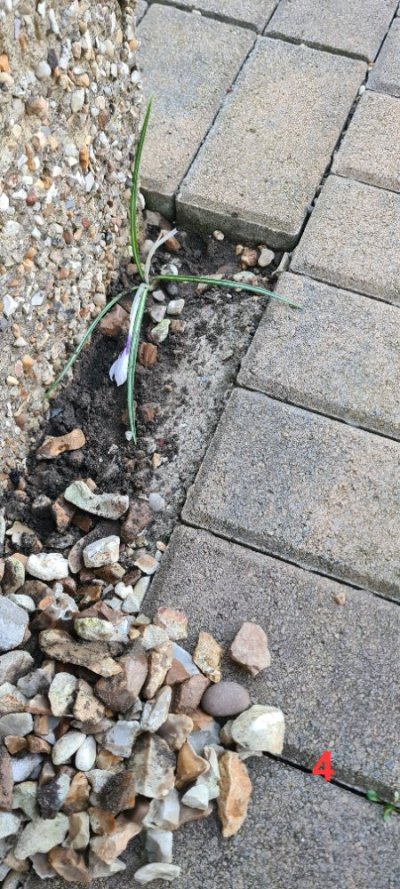
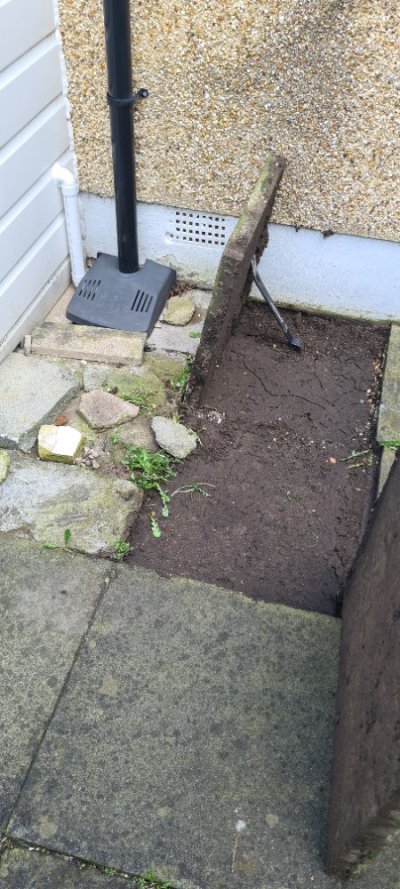
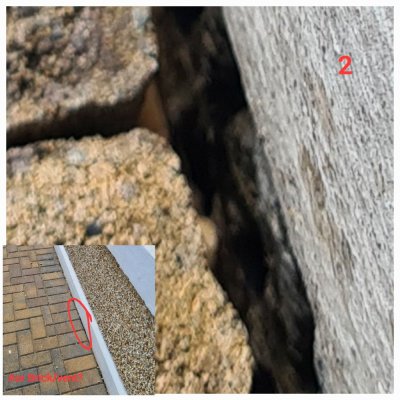
Two most obvious sources are the blocked air vents and the high external ground level. Looking at Google maps archives I can see the levels have been high for at least 15 years with soil and gravel. It was made worse with monoblock around 5 years ago.
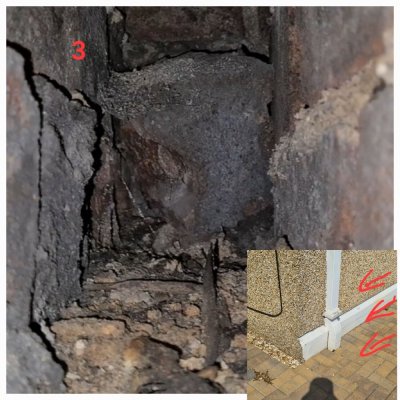
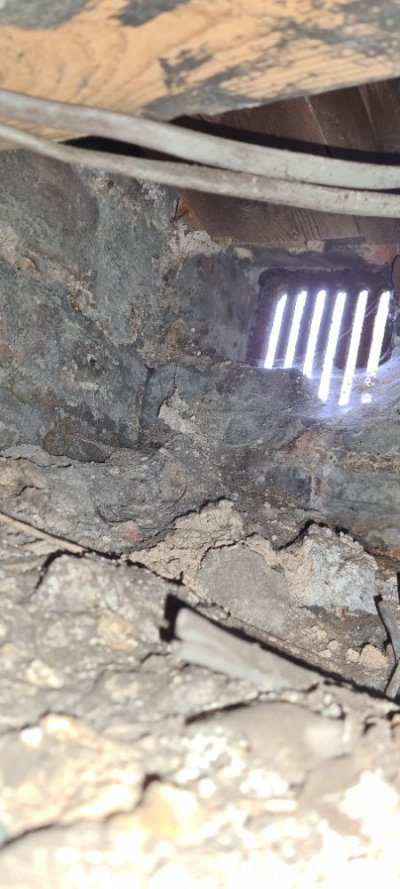
I have one reasonably large cast iron air vent open on the side of the building but it's also one of the points water is probably trickling in.
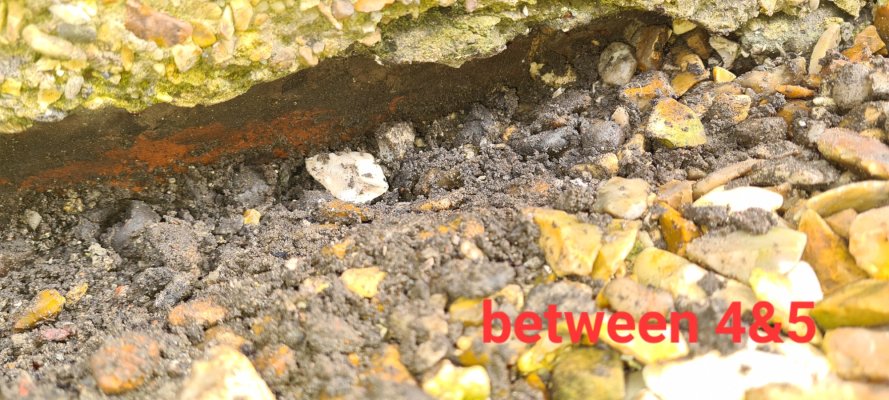
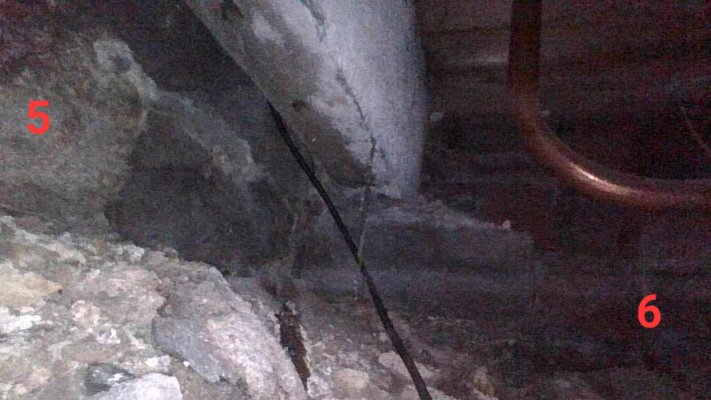
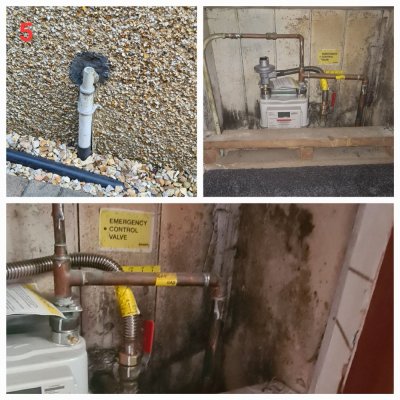
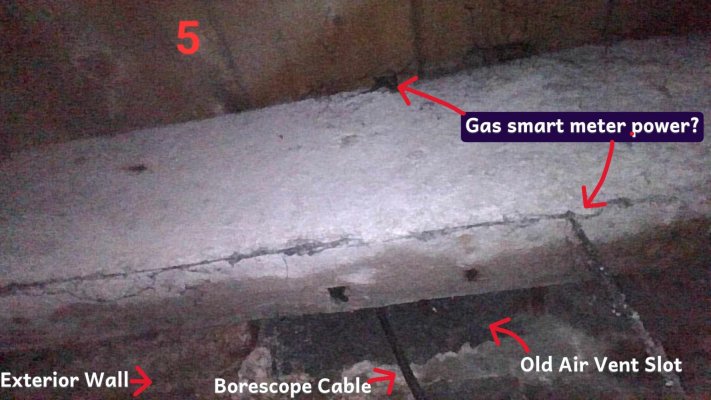
There is one joist that looks covered in what I think is salts. It's the one nearest the gas meter. The slabbed areas are quite uneven. They've been laid on soil only and have moved over time.
The end of it that I can see is sitting on slate. The other section of wood that moisture is getting to is the underside of the subfloor next to the open vent.
I'm looking at digging a trench round the three sides of the house to below the level of the front air brick to begin with. I'm not sure how far down I can dig safely.
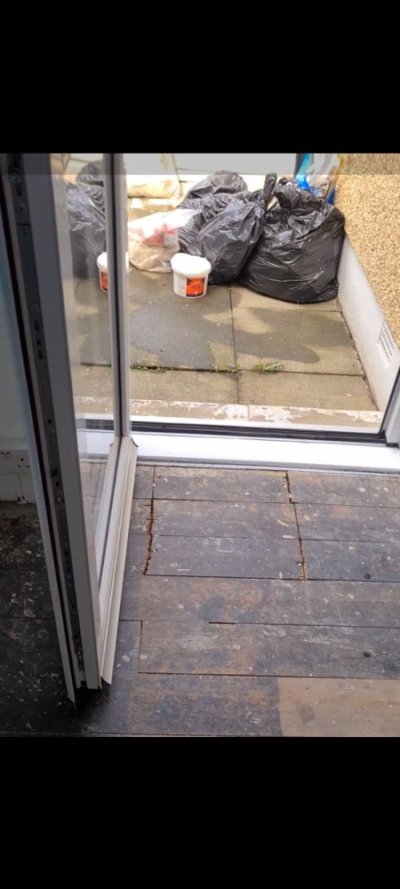
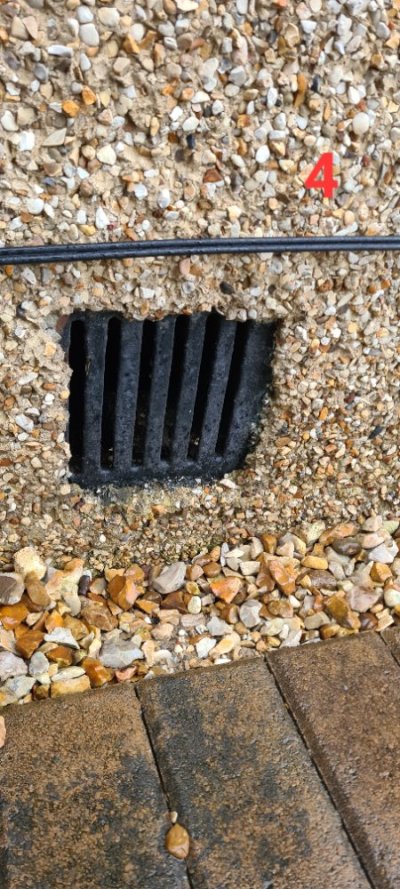
I want to open the air brick below the glass door. What's the best way to check if I can drill the vent holes open?
We would eventually like to remove the monoblock drive and restore a front garden.
Do I need to consult with a builder or structural engineer before making this kind of change, or can I crack on and lower the ground level as a DIY task?
I'd appreciate any thoughts or advice on the most practical approach to take.
Thank you.
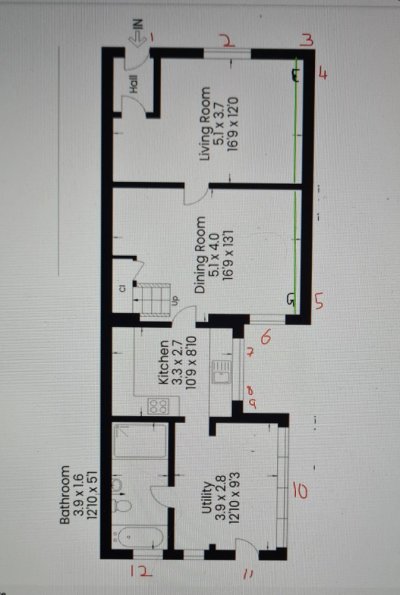
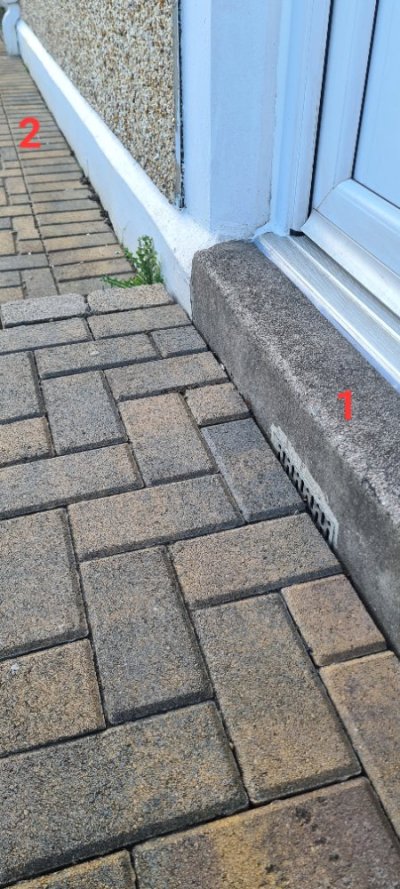
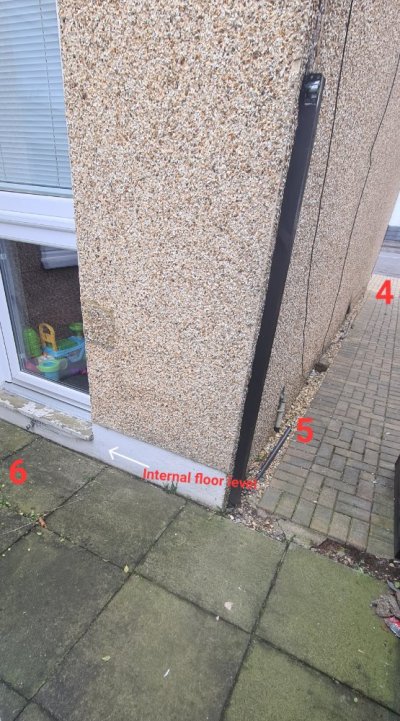
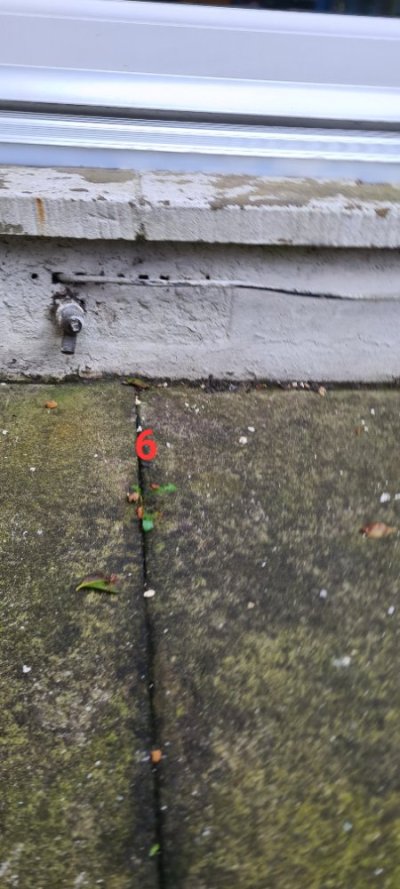
The problem I'm looking to solve is damp and ventilation in the corners of the sub floor void. Inside the rooms the relative humidity, temperature, and ventilation are all ok. RH is always around 40%, temp 20-23c, and it's an easy house to ventilate.
Two most obvious sources are the blocked air vents and the high external ground level. Looking at Google maps archives I can see the levels have been high for at least 15 years with soil and gravel. It was made worse with monoblock around 5 years ago.
I have one reasonably large cast iron air vent open on the side of the building but it's also one of the points water is probably trickling in.
There is one joist that looks covered in what I think is salts. It's the one nearest the gas meter. The slabbed areas are quite uneven. They've been laid on soil only and have moved over time.
The end of it that I can see is sitting on slate. The other section of wood that moisture is getting to is the underside of the subfloor next to the open vent.
I'm looking at digging a trench round the three sides of the house to below the level of the front air brick to begin with. I'm not sure how far down I can dig safely.
I want to open the air brick below the glass door. What's the best way to check if I can drill the vent holes open?
We would eventually like to remove the monoblock drive and restore a front garden.
Do I need to consult with a builder or structural engineer before making this kind of change, or can I crack on and lower the ground level as a DIY task?
I'd appreciate any thoughts or advice on the most practical approach to take.
Thank you.